
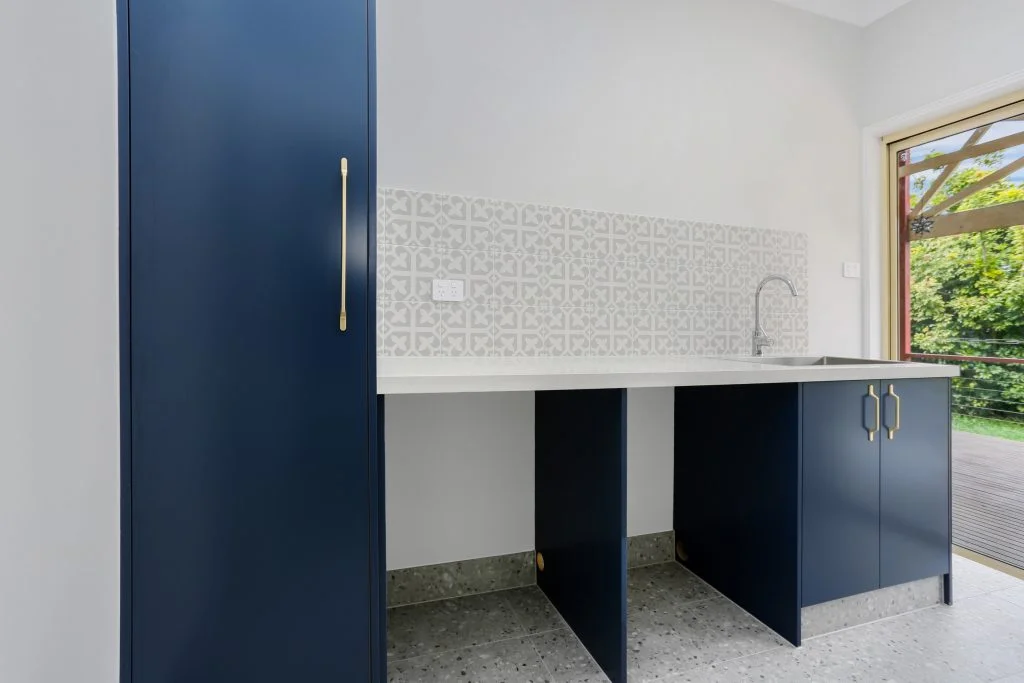
A laundry room renovation sounds simple on paper. New cabinets. Better storage. Maybe a fresh bench. Yet many homeowners finish their renovation only to realise the room still feels awkward to use. Benches are too small. Machines block cupboards. There’s nowhere to sort, fold, or dry clothes properly.
The problem is not effort. It’s planning.
A laundry works hard every single day. If the layout, materials, and workflow aren’t thought through from the start, even a brand-new space can feel frustrating. The good news is that a laundry renovation doesn’t need to be large or expensive to work well. It just needs to be planned with purpose.
This guide walks through how to plan a laundry room renovation that supports real life, not just a showroom look.
Start with How You Actually Use the Laundry
Before choosing tiles or cabinets, step back and look at habits.
Do you wash daily or in bulk?
Do clothes get folded here or elsewhere?
Do you air-dry indoors?
Is the laundry shared with storage or an entryway?
A laundry room renovation should reflect how the space is used, not how it looks online. Families with children need different layouts than couples or downsizers. If ironing happens weekly, you need bench space. If pets are part of the household, durable finishes matter more than design trends.
Write down what currently annoys you about the space. That list is your renovation brief.
Get the Layout Right Before Anything Else
Layout is the backbone of a functional laundry.
Poor planning often leads to machines blocking doors, benches that are too narrow, or cupboards that can’t open fully. Once plumbing and cabinetry are installed, fixing layout mistakes becomes expensive.
A practical laundry layout usually includes:
- Washer and dryer positioned for easy access
- Clear bench space for folding
- Sink placed close to machines
- Storage that doesn’t interfere with movement
Side-by-side machines under a bench work well in most homes. Stacked units save space but need careful ventilation planning. The goal is smooth movement, not squeezing everything in.
Storage Needs More Thought Than People Expect
Most laundries fail because storage is either too shallow or badly placed.
Detergents, baskets, cleaning supplies, towels, and seasonal items all need homes. Open shelving looks good but gathers dust. Deep cupboards without drawers hide things forever.
During a laundry room renovation, aim for:
- Tall cupboards for brooms and mops
- Drawers for smaller items
- Overhead cabinets that don’t feel bulky
- Pull-out hampers or sorting bins
Storage should reduce clutter, not just hide it.
Bench Space Is Not Optional
One of the biggest regrets homeowners share after a laundry renovation is not allowing enough bench space.
Even small laundries need a surface for:
- Sorting clothes
- Folding
- Pre-treating stains
- Temporary storage
If space is limited, a continuous bench over machines works well. Durable surfaces matter here. Cheap laminates swell. Poor joins collect moisture. Choose materials that handle water and cleaning products without stress.
Don’t Overlook Ventilation
Ventilation is one of the most overlooked elements in a laundry room renovation.
Dryers, hot water, and damp clothes create moisture. Without proper ventilation, mould forms quickly. Paint peels. Cabinets warp.
Every laundry should include:
- A strong exhaust fan, or
- A window that allows airflow, or
- A vented dryer solution
Good ventilation protects your renovation long after the last tile is laid.
Lighting Makes a Bigger Difference Than You Think
Laundry tasks require visibility. Poor lighting turns folding and stain removal into guesswork.
Relying on a single ceiling light is rarely enough. Shadows form over benches and sinks.
Plan for:
- Bright general lighting
- Task lighting over benches
- Soft, even light that doesn’t glare
Lighting doesn’t need to be decorative. It needs to be useful.
Choose Materials That Can Handle Daily Wear
A laundry is a wet, busy space. Materials must cope with heat, water, chemicals, and constant movement.
Cabinetry should be moisture-resistant. Benchtops should be sealed properly. Flooring must handle spills without becoming slippery or damaged.
This is where a well-planned laundry room renovation saves money long-term. Durable choices reduce repairs and replacements down the line.
Plan Plumbing and Power Early
Plumbing and electrical planning should never be an afterthought.
Power points placed too low or too few cause frustration. Poorly placed plumbing limits appliance choices.
Think ahead and include:
- Extra power points for irons or steamers
- Space for future appliance upgrades
- Easy access to taps and drainage
Planning early avoids costly changes later.
Think About Noise and Comfort
Laundry appliances are loud. In homes where the laundry sits near bedrooms or living areas, noise matters.
Front-loading machines with vibration control, proper insulation, and solid cabinetry reduce disruption. Soft-close doors and drawers also help maintain a calmer space.
A good laundry room renovation supports the rest of the home, not interrupts it.
Keep the Design Simple and Timeless
A laundry does not need bold colours or complex finishes to feel good.
Light tones help small spaces feel open. Neutral colours age better. Simple handles and clean lines stay relevant longer.
This doesn’t mean boring. It means balanced. A calm design keeps the space functional and pleasant for years.
Work with Professionals Who Understand Workflow
A laundry renovation often looks easy until work begins.
Licensed trades ensure plumbing, electrical, and waterproofing meet standards. More importantly, experienced renovators understand how laundries are actually used.
At TCQE, planning focuses on workflow first, then finishes. That’s how laundries remain functional long after renovation dust settles.
A Laundry That Works Is Planned, Not Rushed
A laundry room renovation succeeds when every decision serves daily use.
Good layout, proper storage, durable materials, ventilation, and lighting all work together. Skip one, and the room struggles. Plan them carefully, and the space supports your routine without effort.
The goal is not just a better-looking laundry. It’s a room that works quietly, efficiently, and reliably every day.
If you’re thinking about a laundry room renovation and want it done properly the first time, TCQE is here to help. We take the time to understand how you use the space before suggesting layouts, materials, or finishes. From planning through to completion, our team focuses on practical design, solid workmanship, and clear communication. Get in touch with TCQE to discuss a laundry renovation that genuinely works for your home.
FAQs
1. How much does a laundry renovation cost in Australia?
In Australia, a laundry renovation typically costs between $8,000 and $20,000, depending on size, cabinetry, plumbing changes, and finishes. Smaller cosmetic updates sit at the lower end, while full custom renovations cost more.
2. How long does it take to renovate a laundry room?
Most laundry renovations take 2 to 4 weeks. Projects involving plumbing relocation, custom cabinetry, or structural changes may take slightly longer.
3. What flooring is best for laundry rooms?
The best flooring for laundry rooms is porcelain tile, vinyl plank, or sealed concrete. These materials handle moisture well, resist wear, and are easy to clean. Slip resistance is also important, especially in family homes.