
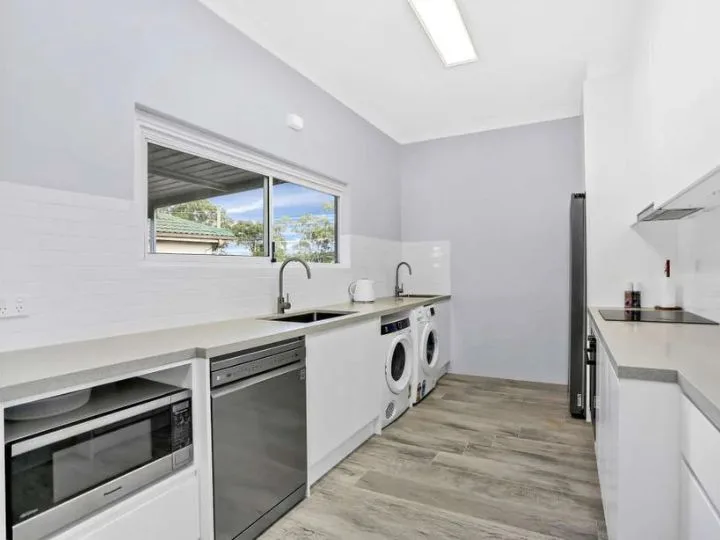
A Laundry Room Renovation in a small or narrow home needs more than a cosmetic refresh. In tighter floorplans, every cabinet depth, appliance position, and walkway matters. If the room is not planned around real movement, it can quickly feel cramped, cluttered, and frustrating to use.
The good news is that small laundries usually have more potential than people expect. A narrow footprint can still support storage, folding space, and efficient appliance placement when the layout is approached carefully. The key is to make the room work vertically, reduce visual bulk, and remove anything that interrupts flow.
This guide focuses on practical, real-world renovation tips that help small and narrow laundries function better every day without forcing oversized design ideas into limited space.
Start with the Walkway, Not the Cabinets
The biggest mistake in a small laundry room renovation is filling the room with cabinetry before thinking about movement.
In narrow homes, you need enough clearance to:
- Open washer and dryer doors
- Move comfortably while carrying baskets
- Access overhead storage safely
- Fold clothes without twisting awkwardly
Before choosing storage, establish the usable walkway first. Once movement feels comfortable, cabinetry can be designed around that space rather than competing with it.
A room that is easy to move through will always feel larger than one with more cupboards but poor flow.
Stack Appliances to Recover Valuable Width
In long or narrow laundries, width is the biggest challenge. Side-by-side machines often consume too much of it.
A stacked washer and dryer setup instantly frees up room for:
- A folding bench
- Tall storage cupboards
- Pull-out baskets
- Open floor area
This is one of the most effective layout decisions in a laundry room renovation because it turns horizontal clutter into vertical efficiency.
The space you recover can dramatically improve how the room works every day.
Use Tall Storage Instead of Deep Cabinets
Deep lower cabinets can make a narrow laundry feel boxed in.
Tall, slimline cupboards often work better because they use wall height instead of walkway width. These are ideal for:
- Brooms and mops
- Cleaning supplies
- Linen overflow
- Drying racks
- Laundry baskets
A narrow room benefits more from vertical storage than bulky cabinetry that intrudes into movement zones.
Tall joinery also helps keep the room visually cleaner because clutter stays hidden.
Add a Bench That Actually Serves a Purpose
Even in the smallest homes, a bench should still be part of the plan.
The mistake is assuming narrow spaces do not allow for one. In reality, a slim bench over front-load machines often provides enough room for:
- Folding
- Sorting
- Stain treatment
- Temporary basket storage
This turns the room into a complete workflow space rather than just an appliance zone.
A practical laundry room renovation should support the full cycle of washing, drying, folding, and storing.
Sliding Doors Work Better Than Swing Doors
Door movement is often overlooked in small and narrow homes.
A standard swinging door can interrupt valuable space, block cabinetry, and make movement feel tighter. Replacing it with:
- A cavity slider
- A barn-style sliding door
- A bifold door
can make the room feel immediately less restricted.
In compact homes, the door itself can be part of the renovation strategy.
Prioritise Smart Drying Solutions
Drying is often where narrow laundries fail.
Without planning for drying, clothes end up spilling into living spaces. The best renovation solutions include:
- Retractable wall-mounted lines
- Ceiling drying racks
- Fold-down wall systems
- Heated drying rails
These options use vertical and overhead zones without reducing walkway width.
A good laundry room renovation should solve the drying problem before it becomes household clutter.
Use Light Materials to Prevent Visual Weight
In small spaces, visual heaviness matters almost as much as physical bulk.
Dark cabinetry, thick benchtops, and bulky joinery can make a narrow laundry feel enclosed. Light finishes help the room breathe.
Best choices include:
- White or warm neutral cabinetry
- Slim benchtops
- Soft stone tones
- Reflective splashbacks
- Bright lighting
These choices help the room feel cleaner, brighter, and more open.
Don’t Ignore Ventilation in Tight Layouts
Small laundries trap moisture quickly.
When the room is narrow, air circulation becomes even more important because damp air has fewer places to escape. Good ventilation protects cabinetry, paint, and surrounding walls.
The best options include:
- High-capacity exhaust fans
- Louvered doors
- Window ventilation
- Condenser dryers with proper airflow
This part of the renovation is often invisible, but it directly affects how long the space lasts.
Create Hidden Storage for Everyday Overflow
Laundry rooms often become overflow zones for items that do not belong elsewhere.
In narrow homes, hidden storage keeps this under control. Useful additions include:
- Pull-out hampers
- Toe-kick drawers
- Narrow shelves between machines and walls
- Overhead cupboards above door height
These details reduce visible clutter without making the room feel overbuilt.
A well-planned laundry room renovation should solve storage problems before they spread into other parts of the home.
Think About Noise in Small Homes
In compact homes, laundries are often close to bedrooms, hallways, or living spaces.
That makes noise reduction part of the renovation plan. Front-load machines on vibration pads, insulated cabinetry, and solid joinery all reduce sound transfer.
The result is a laundry that works hard without affecting the rest of the home.
Why TCQE Focuses on Workflow First
At TCQE, laundry room renovation planning starts with how the room is actually used.
The most successful small laundries are not necessarily larger. They are simply better organised. Appliance placement, drying solutions, storage height, and movement are all designed around everyday habits.
That approach is what turns narrow laundries into highly efficient utility spaces.
A Laundry Room Renovation in a small or narrow home works best when the design focuses on movement, vertical storage, drying, and daily workflow.
The room does not need to be large. It needs to be deliberate.
With stacked appliances, slim storage, proper ventilation, and useful bench space, even the narrowest laundry can feel practical and easy to use. When every detail supports the way the household actually functions, the room stops feeling cramped and starts working properly.
Plan Your Laundry Renovation with TCQE
If your laundry feels too narrow, cluttered, or difficult to use, TCQE can help you rethink the layout properly. We design laundry spaces around real movement, practical storage, and the way your household runs every day. The result is a renovation that feels simple, efficient, and built to last. Speak with TCQE to start planning a laundry room renovation that genuinely works in a smaller home.
FAQs
1. What is the best layout for a narrow laundry room renovation?
The best layout for a narrow laundry room renovation usually includes stacked appliances, vertical storage, and a slim folding bench to preserve walkway space.
2. Can a small laundry still have enough storage?
A small laundry can still have enough storage by using tall cupboards, overhead cabinets, pull-out hampers, and hidden shelving.
3. What appliances work best in narrow laundry rooms?
Front-load washers and stackable dryers work best in narrow laundry rooms because they free up width for benches and storage.
4. How do I make a small laundry feel bigger?
Making a small laundry feel bigger involves using light cabinetry, strong lighting, vertical storage, and reducing bulky joinery.
5. How long does a laundry room renovation usually take?
A laundry room renovation usually takes 2 to 4 weeks depending on cabinetry, plumbing changes, and drying system installation.