
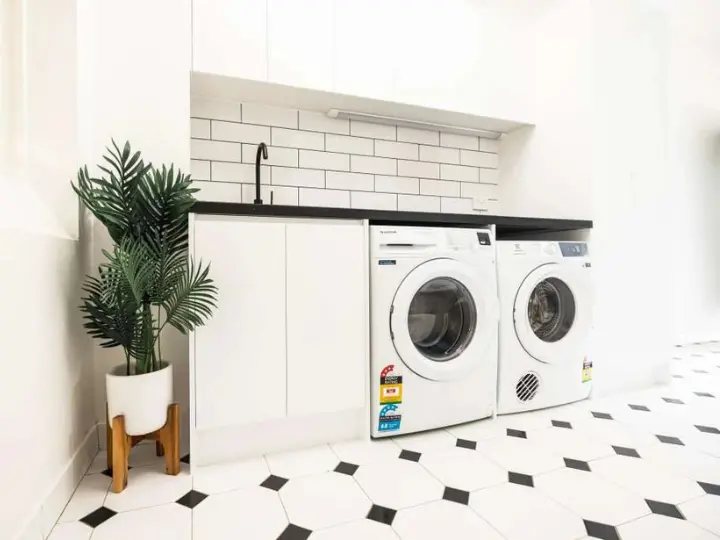
A laundry renovation should make daily life easier. Yet many homeowners finish their upgrade only to realise the space still feels awkward, cluttered, or harder to use than expected. The issue is rarely the budget or the finishes. It’s the planning.
Most laundry problems come from decisions made too early like choosing cabinets before thinking about movement, or focusing on looks instead of workflow. These mistakes don’t always show up immediately, but they become obvious in everyday use.
This guide focuses on the mistakes that actually affect how a laundry works, not just how it looks.
What this article will help you understand:
- Where most laundry renovations go wrong
- How layout mistakes affect daily use
- What practical changes make the biggest difference
- How to avoid costly fixes later
1) Ignoring How You Move Through the Space
One of the most common mistakes in a laundry renovation is designing around cabinets instead of movement.
A laundry may look well-fitted on paper, but if you can’t open appliance doors comfortably or move around with a basket, the space quickly becomes frustrating. Narrow walkways, blocked corners and tight turns are all signs that movement wasn’t considered early enough.
A functional laundry always allows:
- clear access to appliances
- enough space to bend and lift
- room to open doors fully
When movement is planned first, everything else falls into place more naturally.
2) Choosing Storage Before Understanding Needs
It’s easy to assume more cabinets will solve storage problems. In reality, poorly planned storage creates more clutter.
Deep cupboards often hide items rather than organise them. Overhead cabinets can feel bulky if placed too low. And without dedicated zones, everything ends up mixed together.
Better storage comes from understanding what actually needs to be stored detergents, cleaning tools, linen, baskets and then designing around that.
In many cases, a mix of:
- vertical cupboards
- pull-out drawers
- open shelving for frequently used items
works far better than standard cabinetry layouts.
3) Skipping a Proper Drying Plan
Drying is one of the most overlooked parts of a laundry renovation.
Without a clear plan, wet clothes quickly spread into other areas of the home. This not only creates clutter but also disrupts the flow of daily routines.
A well-designed laundry includes a dedicated drying solution from the start. This could be:
- a ceiling-mounted rack
- a retractable wall line
- a heated rail
The right option depends on how often clothes are air-dried and how much space is available. But leaving it out altogether almost always leads to regret.
4) Not Including Enough Bench Space
A laundry without usable bench space feels incomplete.
Folding clothes, sorting loads, or even placing a basket becomes difficult when there’s nowhere to work. This is especially noticeable in smaller homes where the laundry needs to function efficiently.
Even a slim bench over front-load machines can make a significant difference. It creates a clear working surface without taking up additional room.
In most cases, the lack of a bench is something homeowners notice immediately after the renovation is finished.
5) Overcrowding a Small Laundry
Trying to fit too much into a small space is a common mistake.
Extra cabinets, oversized appliances, or bulky designs can quickly make the room feel cramped. This reduces both functionality and comfort.
A better approach is to simplify:
- use stacked appliances instead of side-by-side
- reduce cabinet depth where possible
- leave some open space for movement
A laundry that feels open will always work better than one that is overfilled.
6) Poor Ventilation Planning
Ventilation is often treated as an afterthought, but it plays a critical role in how well a laundry performs over time.
Without proper airflow, moisture builds up. This can lead to:
- mould
- swelling cabinetry
- peeling paint
- lingering odours
A good laundry renovation includes ventilation from the beginning. This might involve:
- an exhaust fan
- a window
- sufficient space around dryers
It’s not the most visible upgrade, but it’s one of the most important.
7) Choosing Materials That Don’t Handle Moisture
Laundry rooms deal with constant exposure to water, heat and cleaning products.
Using materials that aren’t designed for this environment often leads to early wear and damage. Cabinets may warp, surfaces can stain and flooring may become slippery.
Durable choices like moisture-resistant cabinetry, sealed surfaces and slip-resistant flooring help ensure the renovation lasts longer without constant maintenance.
8) Forgetting About Lighting
Lighting is rarely the first thing people think about, but it has a strong impact on usability.
A single overhead light often creates shadows, especially over benches and sinks. This makes everyday tasks harder than they need to be.
Adding layered lighting such as task lighting near work areas improves visibility and makes the space feel more open.
Good lighting doesn’t need to be complicated. It just needs to be intentional.
9) Not Thinking About Noise
In many homes, the laundry sits close to living areas or bedrooms.
Without planning for noise, the sound of washing machines and dryers can become disruptive. This is especially noticeable in smaller homes where spaces are closer together.
Simple solutions like vibration pads, solid cabinetry and thoughtful appliance placement can reduce noise significantly.
Quick Summary: Laundry Renovation Mistakes at a Glance
| Mistake | What Happens | Better Approach |
| Ignoring movement | Tight, awkward space | Plan walkway first |
| Poor storage design | Clutter builds up | Use mixed storage types |
| No drying plan | Clothes spill into other rooms | Add drying system early |
| No bench space | No working area | Install slim bench |
| Overcrowding | Space feels cramped | Simplify layout |
| Poor ventilation | Moisture damage | Include airflow solutions |
| Weak materials | Early wear and tear | Use durable finishes |
| Bad lighting | Harder daily use | Add task lighting |
| Ignoring noise | Disruption at home | Plan sound control |
The Test of a Good Laundry Is Simple
Once the renovation is done, you shouldn’t have to adjust how you use the space to make it work. The space should adjust to you. If it flows, stays organised and handles daily use without effort, then it’s been done right. Most of the mistakes we’ve covered come down to overlooking that simple idea.
A good laundry renovation design always prioritises functionality over appearance. It looks at movement, storage and workflow before finishes. When those elements are planned properly, even a compact laundry becomes practical and easy to maintain.
Fix that thinking early and everything else falls into place.
Plan Your Laundry Renovation with TCQE
If your current laundry feels cramped, inefficient, or difficult to use, TCQE can help you plan a space that works properly from the start. We focus on layout, storage, ventilation and practical design so the room supports your daily routine without frustration. Every decision is made with long-term use in mind, not just appearance. Speak with TCQE to create a laundry renovation that feels right every day.
FAQs
1. What is the most common laundry renovation mistake?
The most common laundry renovation mistake is ignoring layout and movement, which leads to cramped spaces that are difficult to use daily.
2. How do you plan a laundry renovation properly?
Planning a laundry renovation properly starts with understanding how the space is used, then designing layout, storage and workflow before choosing finishes.
3. How much space do you need for a functional laundry?
A functional laundry needs enough space to move comfortably, open appliance doors fully and include at least a small working surface.
4. Can poor ventilation affect a laundry renovation?
Poor ventilation in a laundry renovation can lead to moisture build-up, mould and long-term damage to cabinetry and walls.
5. Are stacked appliances better for small laundries?
Stacked appliances are often better for small laundries because they free up floor space and allow room for storage or bench areas.