
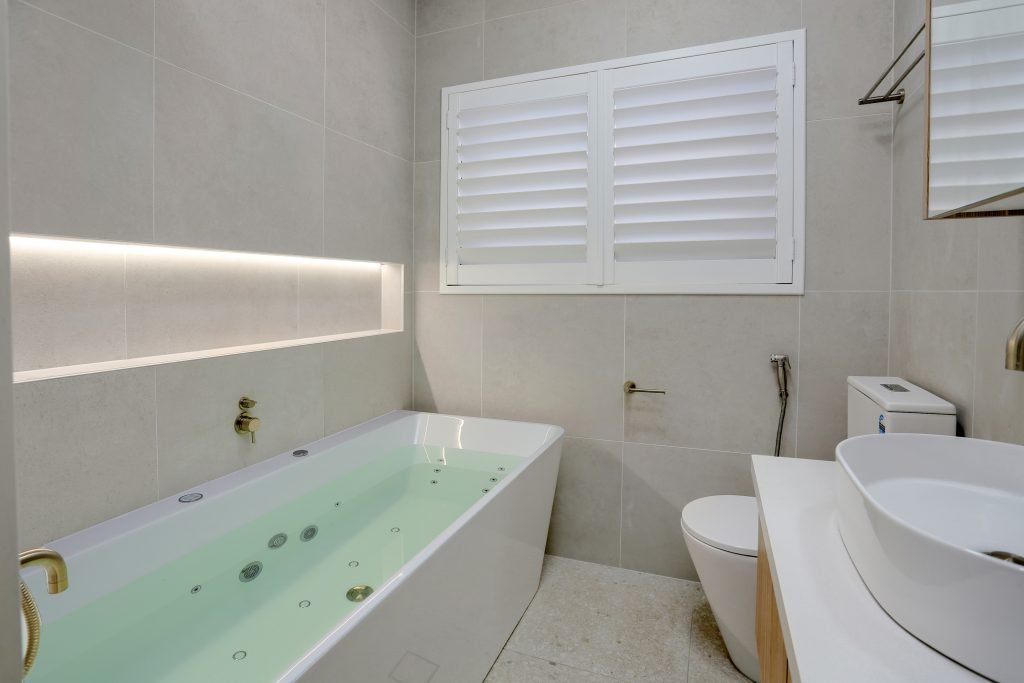
Choosing the right bathroom lighting can transform your space, making it functional, comfortable and visually appealing. Whether you’re considering a full remodel or minor updates, paying attention to lighting is crucial for enhancing the room’s aesthetics and usability.
In this article, we’ll guide you on how to select the ideal lighting for your bathroom, including ambient bathroom lighting and accent bathroom lighting options, while ensuring practicality and style.
Understand the Basics of Bathroom Lighting
Bathroom lighting serves three primary purposes: ambient, task and accent lighting. Understanding how each type works will help you create a well-balanced lighting design.
- Ambient Bathroom Lighting: This provides general illumination and sets the mood of the space. Ceiling fixtures or recessed lights are common for ambient lighting.
- Task Lighting: Ideal for activities like grooming or applying makeup. Wall-mounted lights near mirrors are a popular choice.
- Accent Bathroom Lighting: These lights highlight specific features, such as artwork, niches, or architectural details.
By layering these lighting types, you can achieve a functional and stylish bathroom.
Assess Your Bathroom’s Layout and Size
The layout and size of your bathroom will determine the lighting fixtures and their placement. A spacious bathroom may require multiple light sources to cover the entire area, while a compact space may need fewer fixtures.
Key considerations:
- Identify dark corners or poorly lit areas.
- Ensure there’s adequate lighting near mirrors for grooming tasks.
- Balance light placement to avoid harsh shadows.
Choose the Right Fixtures
The choice of fixtures plays a vital role in achieving the perfect bathroom lighting. Here’s what to consider:
- Ceiling Lights: For overall brightness, install flush-mounted ceiling lights or recessed lighting. These provide uniform illumination and suit most bathroom styles.
- Wall Sconces: Position these on either side of the mirror for even, shadow-free lighting.
- Pendant Lights: Great for adding a decorative touch, especially above a vanity.
- LED Strip Lights: These can be placed under cabinets or around mirrors for modern bathroom lighting ideas.
Opt for Energy-Efficient Options
Energy-efficient lighting, such as LED bulbs, is a smart choice for bathrooms. They consume less power, last longer and come in a variety of colour temperatures.
Tips for selecting LED lighting:
- Choose a colour temperature between 2700K and 3000K for a warm, inviting glow.
- Opt for dimmable LED fixtures to adjust brightness as needed.
- Ensure the bulbs have a high Colour Rendering Index (CRI) for accurate colour representation.
Focus on Safety
Bathrooms are high-moisture areas, so it’s essential to select fixtures and bulbs designed for wet or damp conditions. Look for lights with the appropriate IP (Ingress Protection) rating to ensure safety and longevity.
Important considerations:
- Use IP44-rated fixtures for areas exposed to splashes, such as near sinks or bathtubs.
- Ensure electrical installations comply with safety standards.
Enhance Aesthetics with Accent Lighting
Adding accent bathroom lighting can elevate your space and make it feel more luxurious. Use accent lights to highlight specific elements in your bathroom.
Ideas for accent lighting:
- Install LED strips under floating vanities for a contemporary look.
- Use small spotlights to highlight decorative features like shelves or artwork.
- Add backlighting to mirrors for a soft, halo effect.
Select the Right Colour Temperature
The colour temperature of your lighting can significantly impact the ambience of your bathroom. It’s measured in Kelvin (K) and ranges from warm to cool tones.
Best practices:
- Warm white light (2700K–3000K) creates a cosy and relaxing atmosphere.
- Cool white light (3500K–4100K) is suitable for task lighting as it mimics natural daylight.
- Avoid overly bright or harsh lighting, which can make the space feel clinical.
Tips for Small Bathrooms
If your bathroom is compact, clever lighting can make it appear larger and more inviting.
Lighting ideas for small bathrooms:
- Use mirrors to reflect light and create an illusion of space.
- Install recessed lighting to save ceiling space.
- Opt for light-coloured fixtures and bulbs to brighten the room.
Incorporate Dimmers
Dimmer switches offer flexibility, allowing you to adjust the brightness based on your needs. For instance, brighter lights can be used for grooming, while dimmed lights create a spa-like ambience.
Benefits of dimmers:
- Reduce energy consumption.
- Extend the lifespan of your bulbs.
- Create customisable lighting settings.
Maintain Your Bathroom Lighting
Proper maintenance of your bathroom lighting is essential for ensuring functionality, efficiency and longevity. Here are some simple yet effective tips to help you maintain your lighting:
- Clean Fixtures and Bulbs Regularly:
Dust and grime can accumulate on light fixtures and bulbs, reducing their brightness and efficiency. Use a soft cloth or a microfiber duster to clean them gently. For tougher stains, a mild cleaning solution can help restore their shine.
- Replace Burnt-Out Bulbs Promptly:
A single burnt-out bulb can disrupt the lighting balance in your bathroom. Always keep spare bulbs on hand and replace them as soon as they stop working.
- Inspect for Wear or Damage:
Check for any signs of corrosion, loose wiring, or damage to fixtures, especially in areas exposed to high moisture levels. Address these issues promptly to ensure safety and prevent further deterioration.
Regular upkeep not only enhances the performance of your bathroom lighting but also prolongs the lifespan of your fixtures.
Achieve a Cohesive Bathroom Lighting Design
Creating a harmonious lighting scheme is essential to ensuring your bathroom feels well-designed and inviting. To achieve this, all lighting elements—ambient, task and accent—should complement each other in both style and functionality. Avoid combining too many different fixture designs or mixing inconsistent colour temperatures, as this can lead to a cluttered and disjointed appearance.
Instead, choose fixtures that align with your bathroom’s overall aesthetic. For example, sleek, minimalist lighting works well in modern spaces, while ornate sconces may suit a traditional design. Maintain consistency in finishes, such as brushed nickel or matte black, to tie the look together.
Pro tip: Pay close attention to the colour temperature of your bulbs. Warm tones create a cosy ambience, while cooler tones are ideal for precise tasks like grooming. A balanced lighting scheme not only enhances the visual appeal of your bathroom but also ensures it meets your functional needs.
Illuminate Your Bathroom with Style and Function
Selecting the perfect bathroom lighting involves balancing functionality, safety and aesthetics. By combining ambient bathroom lighting, task lighting and accent bathroom lighting, you can create a space that meets your needs while reflecting your style.
If you’re planning bathroom renovations or need expert assistance, reach out to TCQE Maintenance & Renovations for professional solutions tailored to your needs.
FAQs –
Q1: What kind of lighting is best for bathrooms?
A1: The best bathroom lighting combines ambient, task and accent lighting for a balanced and functional setup. Use ceiling lights for general illumination, wall sconces near mirrors for grooming and LED strips for decorative touches. Choose energy-efficient LEDs with warm or neutral tones for versatility.
Q2: What IP rating for bathroom lights Australia?
A2: In Australia, bathroom lights near water sources should have an IP44 rating or higher to protect against moisture and splashes. For lights directly exposed to water, such as those above showers, an IP65 rating is recommended for maximum safety.
Q3: Can you put an LED downlight above a shower?
A3: Yes, LED downlights can be installed above showers, but they must have a minimum IP65 rating to ensure they are waterproof and safe in wet conditions. Always consult a licensed electrician for proper installation.
Q4: Is it better to have soft or bright light in a bathroom?
A4: Soft lighting is ideal for creating a relaxing ambience, while bright light is better for tasks like shaving or applying makeup. A combination of both, with dimmable options, allows flexibility based on your needs.